






 Settings
 Fast Delivery
 Free Shipping
 Incoterms
 Payment Types


 Marketplace Product

Automotive Sensor Fusion Boosts Reliability and Safety
Contributed By Electronic Products
2014-03-06
In the automotive world, the use of radar, video cameras, lasers (LIDAR, a light detecting and ranging technology that can measure the distance to a vehicle or object by illuminating it using pulses from a laser), infrared, and ultrasonic sensor systems, is dramatically advancing safety efforts by preventing accidents due to driver error, distraction, inattention, and drowsiness. In the past, these and other automotive safety systems were separate, nonintegrated technologies placed within a vehicle to locate stationary objects and track moving targets so as to warn a driver of any dangers that may lie ahead on the road. However, sensor fusion now helps combine information from a variety of different sensors to decrease response time and increase accuracy (for an introduction to this topic see the TechZone article “Sensor Fusion: The Basics”).
Essentially, sensor fusion combines the strengths of multiple sensing technologies and expertly manages those inputs. This combination of sensory data from many sources means that the data provided from individual sensors will be improved by the combination, enabling the sensors to do collectively more than they could achieve individually.
The fusion of sensor data is becoming the norm in such vehicle-based areas as:
- Braking — Automatic braking, intelligent brake assistance
- Cruise Control — Full-speed and range adaptive control
- Driver Alerts — Forward collision alerts, lane departure signaling, side blind-spot surveillance, rear cross-traffic warning
- Vision — Rear vision cameras, head-up displays
The sensor fusion system combines hardware, associated algorithms, simulators, and modeling tools to develop a platform that uses all of the data provided simultaneously to ensure and enhance the safety of modern passenger vehicles. “Sensor fusion” and “data fusion” are terms that are often used to mean the same thing. They both merge data from multiple sources. Data fusion takes place near the sensors using raw data, but sensor fusion, to borrow from the vernacular of chef Emeril Lagasse, “kicks it up a notch.”
For automotive applications, it is also imperative that there be a level of redundancy not required in many other applications so that the safety and reliability of the system is ensured. High-performance navigation, inertial measurements, satellite positioning, and odometry, among others, provide the necessary redundancy.
Within the automotive design and test arena, sensors include transducers, load cells, accelerometers, linear variable differential transformers (LVDTs), torque meters, temperature sensors, gyroscopes, fluid property analyzers, and miniature pressure and force sensors. These devices are all critical.
Let’s now look at a few examples.
The STMicroelectronics AIS326DQ MEMS inertial sensor (Figure 1) is a three-axis, low-g accelerometer with digital output that includes a sensing element and IC interface, able to use sensing information to provide measured acceleration signals to the external world through an SPI serial interface or I²C-compatible interface. The sensor detects and measures acceleration over a bandwidth of 640 Hz for all axes, and is specified over a temperature range from –40° to +105°C.
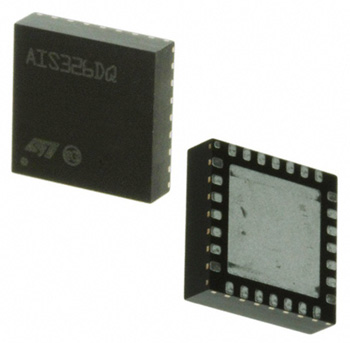
Figure 1: The AIS326DQ MEMS inertial sensor from STMicroelectronics.
The IC interface is manufactured using a CMOS process that the supplier claims allows a high level of integration. Engineers can design a dedicated circuit that is factory trimmed to better match the sensing element characteristics. The AIS326DQ has a user-selectable full scale of ±2 g, ±6 g, and can measure acceleration over a bandwidth of 640 Hz for all axes. The device bandwidth may be selected accordingly with the application requirements. A self-test capability allows the user to check the functioning of the system. Automotive applications range from antitheft and inertial navigation to motion-activated functions, vibration monitoring, compensation, and tilt measurements.
Another sensor from STMicroelectronics is typically used for in-dash car navigation. The A3G425D (Figure 2) is a low-power three-axis angular rate sensor designed to provide stability at zero rate level and sensitivity over temperature and time.
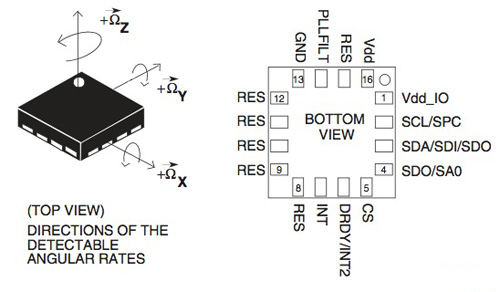
Figure 2: Pin description and diagram for the A3G425D from STMicroelectronics.
The motion sensor features a wide supply voltage from 2.4 to 3.6 V, integrated low and high-pass filters with user-selectable bandwidth, low-voltage-compatible I/Os (1.8 V), embedded power-down and sleep mode, an embedded temperature sensor, high-shock survivability, and it meets the AEC-Q100 qualification. The device is said to be ultra-stable over temperature and time.
The part includes a sensing element and an IC interface capable of providing the measured angular rate to the external world through a standard SPI digital interface. An I²C-compatible interface is also available.
Another good example of parts made with sensor fusion in mind is the 6DF series six-degrees-of -freedom Inertial Measurement Unit (IMU) sensors from Honeywell Sensing and Control. These devices are designed to provide motion, position, and navigational sensing from a durable single device. Using MEMS technology, the IMU senses translational movement in three perpendicular axes (surge, heave, and sway) and rotational movement about three perpendicular axes (roll, pitch, and yaw). Given that the movement and rotation along the three axes are independent of each other, such motion is said to have “six degrees of freedom.” The 6DF series IMU measures motion and delivers the data to a control module using an industry-standard CAN SAEJ1939 communications protocol.
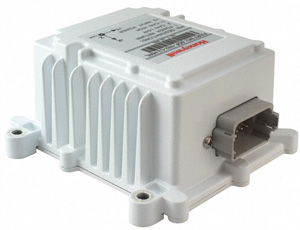
Figure 3: An IMU from Honeywell Sensing and Control that targets the harsh environment of automotive design.
The device provides highly-accurate six-dimensional rotation and acceleration based on durable packaging, superior stability, software filtering and design, and automotive-grade Six Sigma testing requirements. Temperature compensation is provided: a temperature sensor is placed within each rotation rate sensor within the IMU. It provides a temperature value to the processing module where the data samples are filtered and compensated and allows the system to perform over a wide temperature range.
The IMU is automotive-grade qualified and certified to operate in environments from –40° to 185°F. It meets EMC and EMI requirements, as well as chemical compatibility. The 6DF series is available in two versions: one with a 2 g accelerometer and the other with a 6 g accelerometer.
While significant strides have been made in the automotive sensor-fusion segment, a great deal of research and development is ongoing. Navigation, mapping, tracking, obstacle avoidance, and path planning are being developed at various rates. Holistic development is therefore in the foreground, versus the bringing together of sensors that are still, to a large degree, separate entities.
Given that new safety features are often heavily promoted by car manufacturers, progress in developing safety systems that rely on sensor fusion is quite evident. For example, the 2013 Cadillac XTS offers an available Driver Assistance Package that is the first GM system of its kind to use sensor fusion. The system enables integration of a broad range of sensing and positioning technologies that can alert drivers of road hazards and help them avoid crashes.
It is also apparent that more improvements are needed, such as geographic information systems upon which navigation devices rely, as GPS effectiveness can be limited in urban canyon environments where high-rise buildings interfere with satellite signals. Vision sensor fusion is also still in its infancy. The good news, however, is that sensor and automotive manufacturers are collaborating with research institutes and academia so engineers can look forward to more multiple-sensor systems and supporting technologies designed to work together synergistically and seamlessly, creating new options for the designer.
For more information on the parts discussed in this article, use the links provided to access product information pages on the DigiKey website.
Disclaimer: The opinions, beliefs, and viewpoints expressed by the various authors and/or forum participants on this website do not necessarily reflect the opinions, beliefs, and viewpoints of DigiKey or official policies of DigiKey.







 Philippines